
Minimally invasive spine surgery
Keyhole spine surgery, chosen with care
Endoscopic spine surgery works through a very small opening, using a camera and fine instruments to reach the affected disc or nerve. The approach is designed to preserve the paraspinal muscles that support the spine, which can mean less tissue disruption than conventional open surgery.
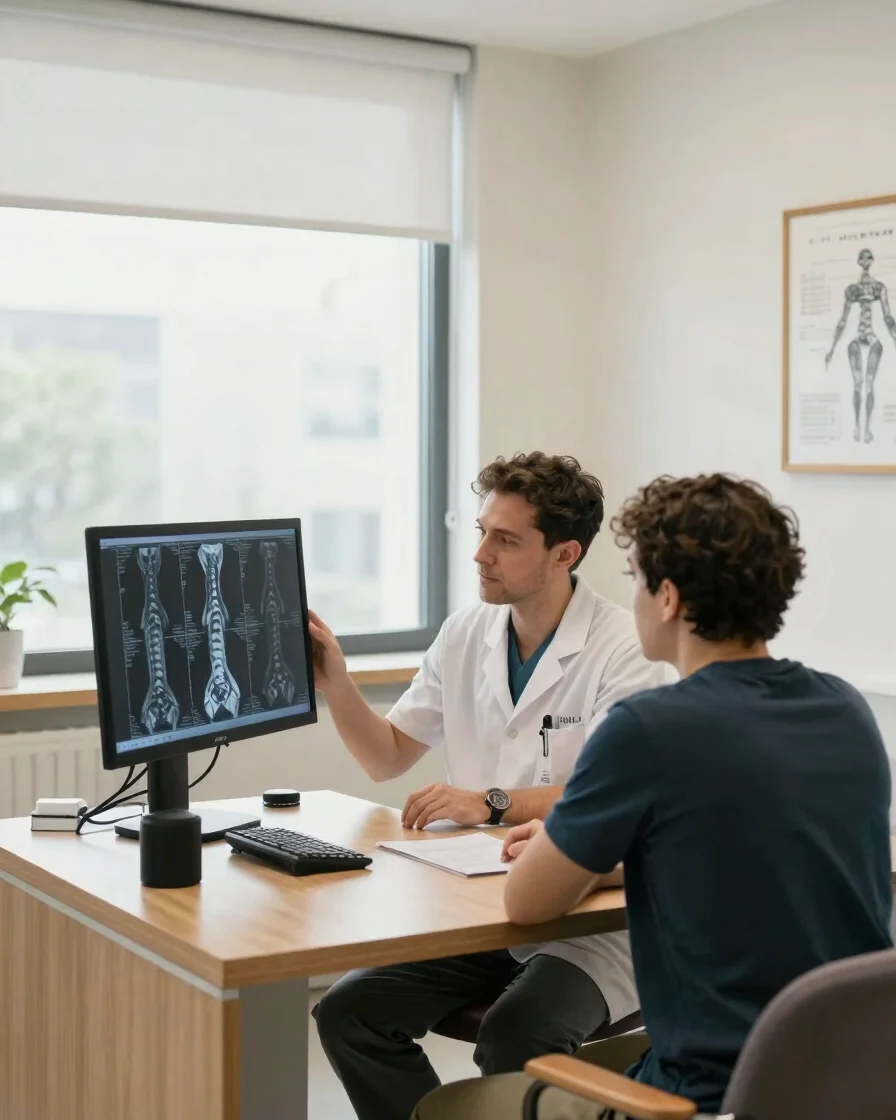
Whether keyhole surgery is suitable depends on the location and type of the problem, the imaging findings, and your overall health. Surgical selection is made case by case, and non-operative options are considered first where they are appropriate.
Keyhole approaches
Uniportal and biportal techniques
Both approaches use a small working channel to remove the portion of disc or bone pressing on a nerve, while keeping surrounding tissue intact.
Uniportal
Single-portal endoscopy
One small incision carries both the endoscope and the instruments. It is used for targeted lumbar decompression and disc excision, including selected cervical interventions.
Biportal
Two-portal endoscopy
Separate portals allow the camera and working instruments to move independently, giving wider access for decompression and disc removal in suitable cases.
Recovery
Reduced tissue trauma
Preserving the paraspinal musculature and limiting incision size are intended to reduce tissue trauma and support a streamlined hospital stay. Recovery timelines vary by patient and procedure.
Find out whether keyhole surgery suits your spine
Book a surgical evaluation to review your imaging and discuss the options.